These days, it’s common to see signs that say “Help Wanted” at restaurants and cafes.
But this labor shortage isn’t unique to Korea. In many developed countries like the UK and Japan, on-site or manual jobs are becoming less popular, while more people are gravitating toward office and professional positions. This trend is having a major impact across industries that rely on physical labor, such as manufacturing, logistics, and construction.
In particular, industries with a high number of short-term contracts and a constantly changing workforce face even greater challenges in managing their employees effectively.
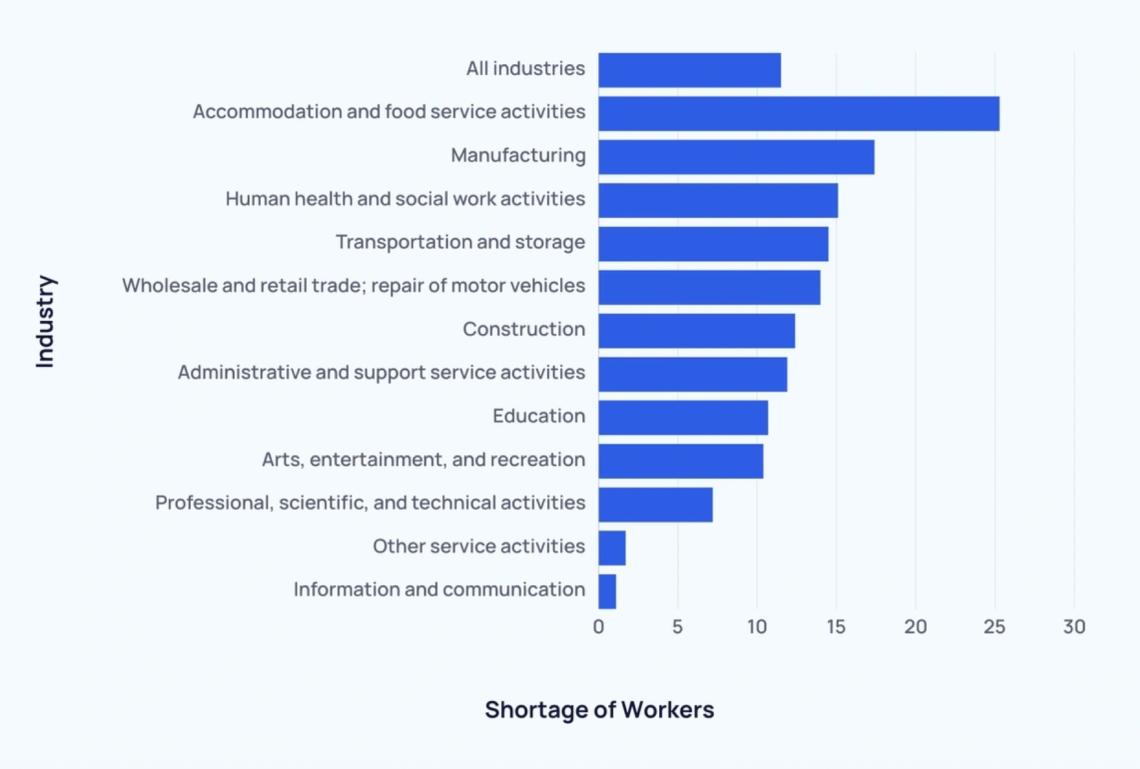
UK Labor Shortage by Industry (% of workers)
And the industry that best illustrates this problem? Construction.
According to recent UK data, labor shortages in the construction and manufacturing sectors have reached their highest point in a decade.
So, who’s stepping in to fill the gap? Foreign workers.
Across OECD countries, their numbers continue to rise — and on many construction sites, they’ve become indispensable.
They’re not just supporting the work; in many cases, they’re the ones keeping the entire site running.
Different Languages, Different Work Patterns — One Endless Management Struggle
The real issue isn’t just the shortage of workers. On modern construction sites, people come from different countries, speak different languages, work on different schedules, and operate under different contract terms. Now, try managing all that with a paper sign-in sheet — and you’ve got a recipe for chaos: missing work hours, inaccurate records, and endless payroll dispute
From every angle:
- Workers worry: “Will I get paid for all my hours?”
- Site managers stress: “Who’s actually here today?”
- Main contractors are buried in admin: “I need to verify all these subcontractor reports?”
The takeaway is clear: manual attendance tracking belongs in the past.
It’s time to rely on a smart system that does the job accurately and effortlessly.
The Electronic Attendance Card System of South Korea
South Korea tackled this with the Electronic Attendance Card System.
It’s more than a simple clock-in machine—it’s a system that fairly calculates work hours and days, ensuring wages and retirement benefits are accurately paid.
Here’s how it works: when a worker tags their electronic card at a terminal, attendance is automatically logged and sent to a central server.
No more missing entries, no more false reports—just reliable, tamper-proof records. It’s a win-win: workers’ rights are protected, and sites get accurate data to run operations smoothly.
The Need for Terminals in Attendance Management
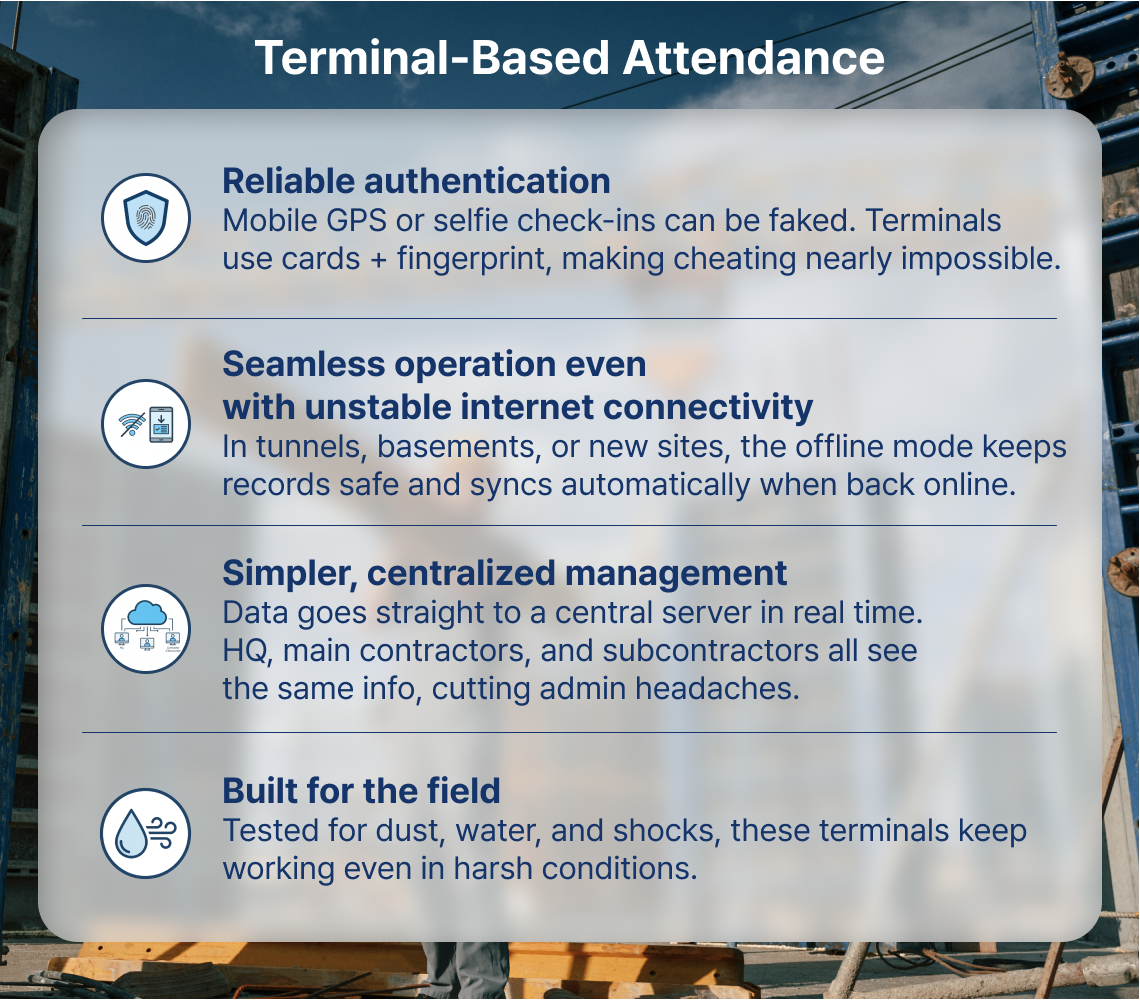
Sure, mobile apps can track attendance, but construction sites are not offices.
For rough, unpredictable environments, dedicated smart terminals are more reliable.
Designed for the field, UNION biometrics’ T-500 Terminal combines portability and durability with dual authentication support— electronic card and fingerprint. It delivers reliable attendance tracking, whether fixed at an entry point or used on the move.
Technology for Transparent Worksites
On construction sites with high turnover and a diverse workforce, fair and automated systems aren’t optional—they’re essential.
Electronic cards and smart terminals:
- Record attendance fairly
- Prevent pay disputes
- Streamline management
- Strengthen trust and legal transparency across the site
UNION biometrics’ smart terminals don’t just log hours—they help create a new kind of “transparent worksite”, where workers and companies can trust the records and each other.