The Reality Behind Construction Site Accidents
Whenever we hear news about an accident on a construction site, it hits hard.
A short headline like “A worker died in an accident” carries the deep grief of a family waiting for someone who will never come home again.
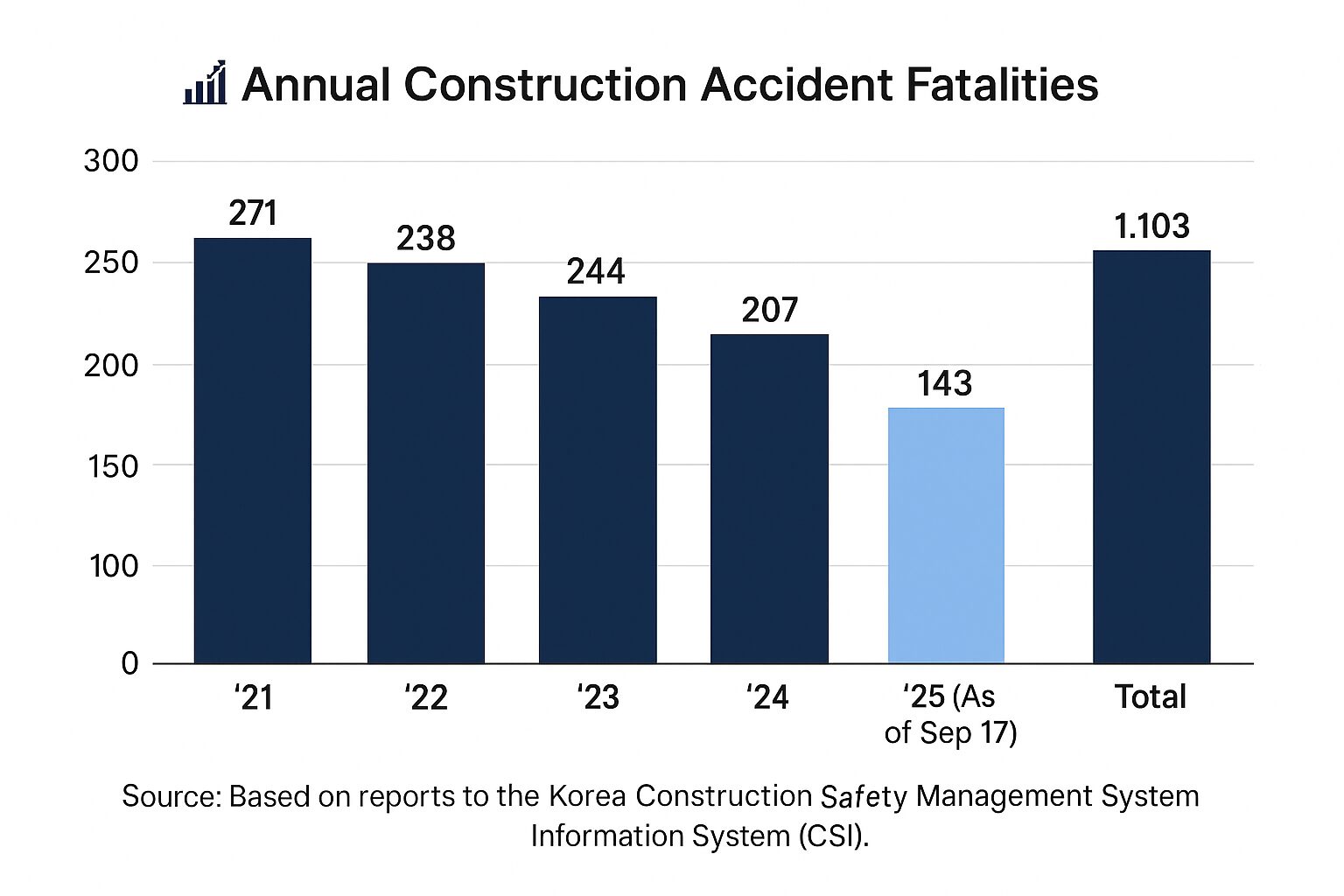
In the past five years, more than 1,100 people died on construction sites in Korea. In 2024, the number reached 207, and as of September 2025, another 143 people have died.
One of the biggest reasons this continues happening is simple yet critical: many sites still aren’t being properly inspected.
Why Sites With Fewer Inspections See More Accidents
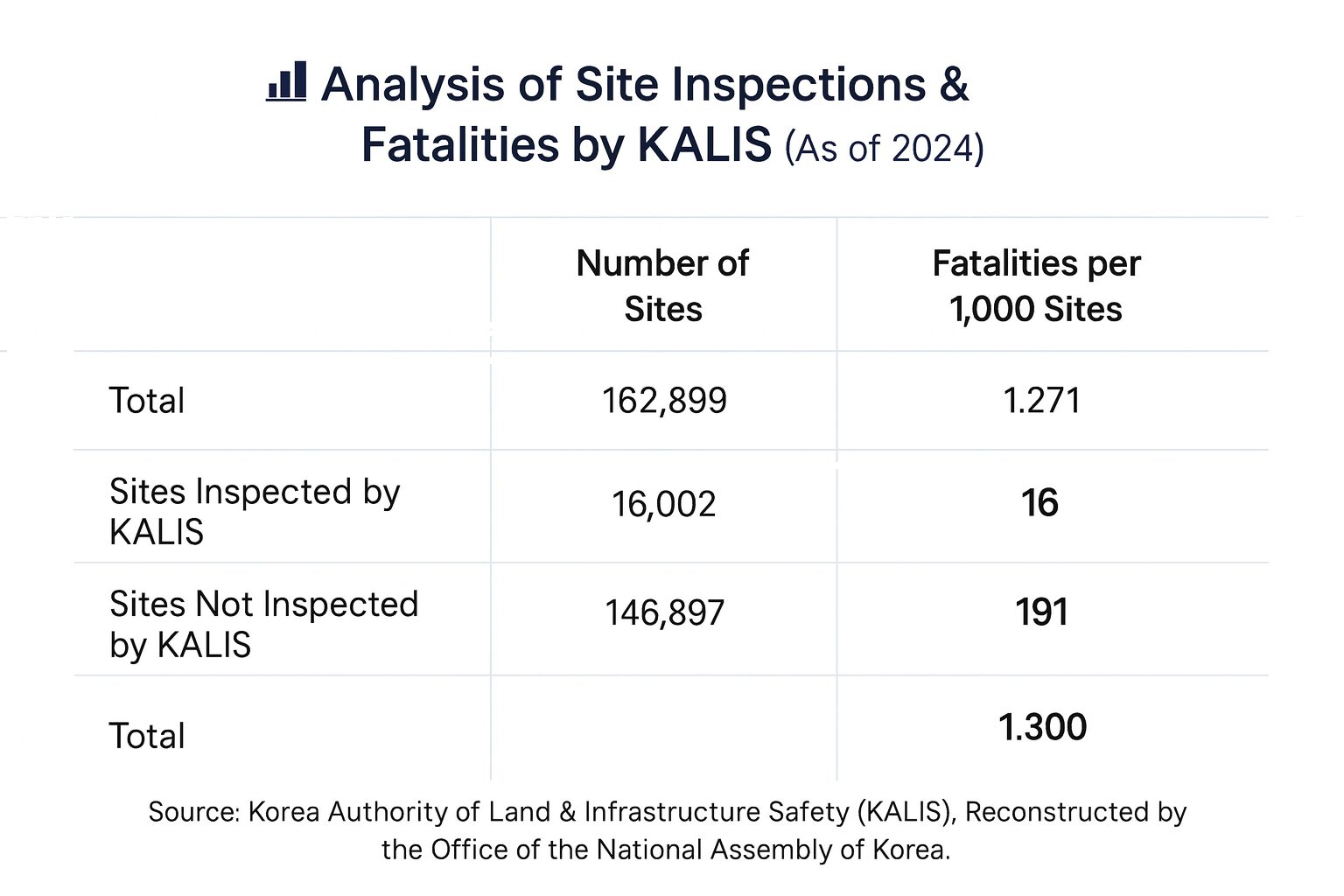
Data from the Korea Infrastructure Safety & Technology Corporation shows this clearly.
When comparing inspected sites to those that weren’t inspected, uninspected sites had about 30% higher fatality rates.
Even this one factor — whether a site was inspected or not — can dramatically change the baseline level of safety.
But inspections are only part of the story. There’s another crucial factor we need to talk about.
The Hidden Root Cause: Worker Health & Physical Condition
Construction accidents don’t happen only because equipment fails or structures are unstable.
When we dig deeper into accident reports, a worker’s physical and health condition often plays a huge role.
Here are some examples of what that looks like on-site:
- Fatigue or lack of sleep → slower reaction time, reduced focus, and simple mistakes turning into dangerous accidents.
- Existing health conditions → workers with hypertension or heart issues may suddenly collapse during physically demanding work.
- Extreme heat or cold → dehydration, dizziness, and other warning signs that quickly lead to risky behavior.
- After-effects of alcohol or medication → reduced balance, impaired judgment, and slower reflexes.
In other words, a worker’s health isn’t just background noise — it can be a direct trigger for an accident.
Korea’s Fast-Aging Workforce: A Critical Safety Concern
And among all these factors, one stands out: the rapid aging of the construction workforce.
More and more construction workers today are older, and that’s not just a demographic shift — it’s a serious safety risk.
Statistics from the Korea Occupational Safety and Health Agency reveal this clearly:
▶︎ Older workers account for a disproportionate number of deaths
In 2023, more than half of all construction-related deaths involved workers aged 60 or older. Why? The reasons are straightforward:
- Slower reflexes and reduced strength → harder to avoid sudden dangers like falling objects
- Higher rates of hypertension and cardiovascular issues
- Increased vulnerability to heat stress and dehydration
Because of this, being able to check a worker’s blood pressure, heart rate, body temperature, and stress level in real time is no longer “nice to have.”
It’s becoming a core safety requirement.
So the real question becomes: If we want to prevent accidents before they happen, what kind of safety system do we need on-site?
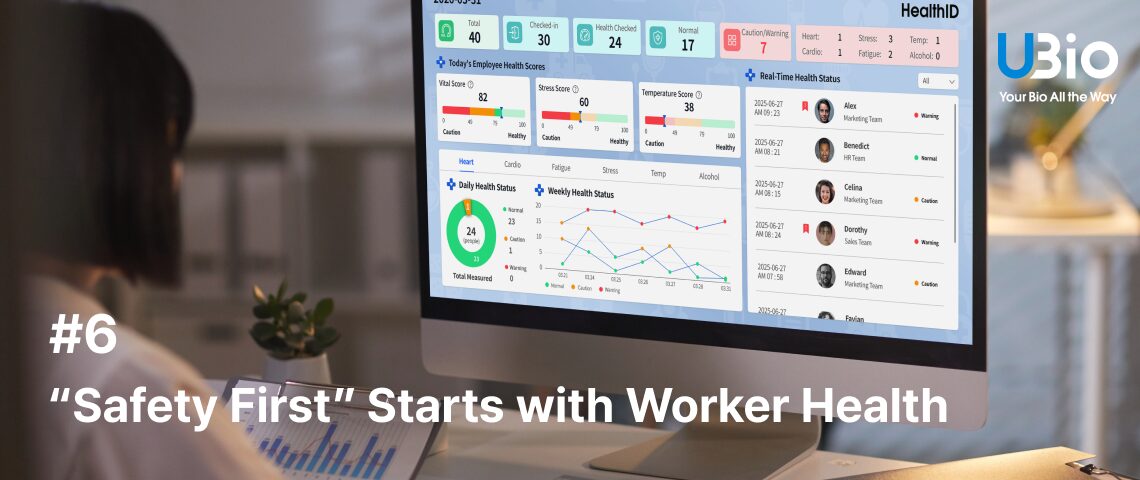
This is exactly where UNION biometrics’ HealthID comes in.
Turning Health Data Into a Powerful Safety Tool
HealthID isn’t just another piece of equipment.
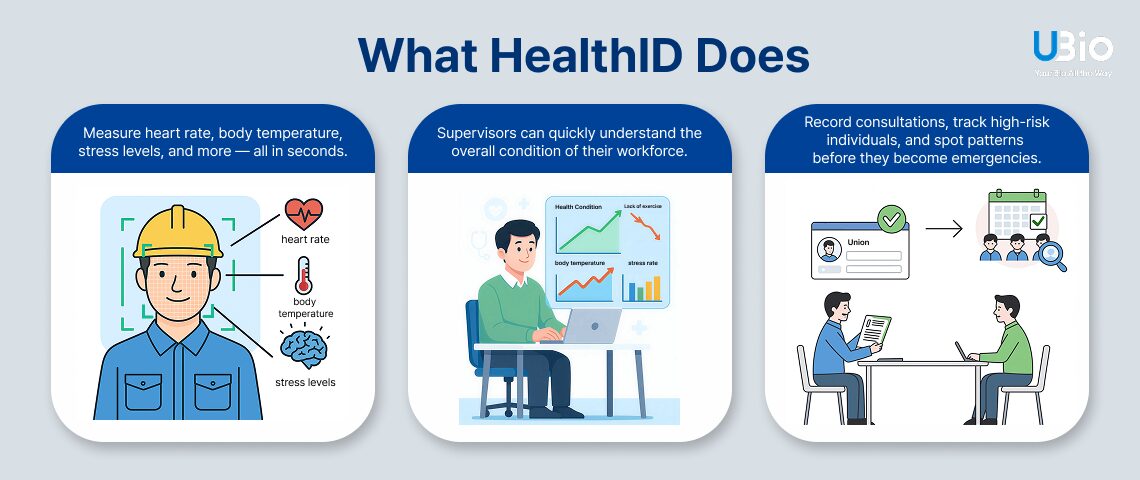
It’s a smart, real-time health monitoring solution designed to catch early signs of risk — especially for older workers.
For example, if an older worker shows early signs of rising blood pressure or irregular heart rate during work, HealthID detects it immediately and alerts the supervisor — allowing intervention before an accident occurs.
Building Truly Safe Construction Sites Starts With People
Construction accidents are rarely caused by just one problem.
They happen when equipment issues, environmental hazards, fatigue, and health conditions intersect.
HealthID strengthens one of the most overlooked parts of this equation: the worker’s physical condition.
By giving teams an easy, accurate way to track health in real time, it helps build sites where safety is not just a rule — but a system that protects workers from every angle. Because ultimately, safer sites start with caring for the people, the equipment, and the environment — all together.