Fingerprint recognition has long been one of the most widely adopted and efficient biometric authentication methods. Compared with passwords, it is less vulnerable to leakage or loss, and unlike card-based authentication, it carries a relatively lower risk of lending or duplication. As a result, enterprises and public institutions have implemented fingerprint authentication across a wide range of operational environments, including access control, time and attendance, and visitor management.
However, one critical question remains: is the fingerprint placed on the sensor actually from a living person?
Rethinking Fingerprint Authentication: The Limits of Shape-Based Approaches
Traditional fingerprint recognition systems do not compare the entire fingerprint image as-is. Instead, they determine identity by extracting and matching minutiae—local features such as ridge endings and bifurcations. This is commonly referred to as minutiae-based matching.
Because it requires relatively small amounts of data and enables fast processing, minutiae-based matching has been widely adopted for many years and continues to serve as one of the most commonly used fingerprint authentication methods today. However, as authentication technologies have advanced, so too have spoofing techniques.
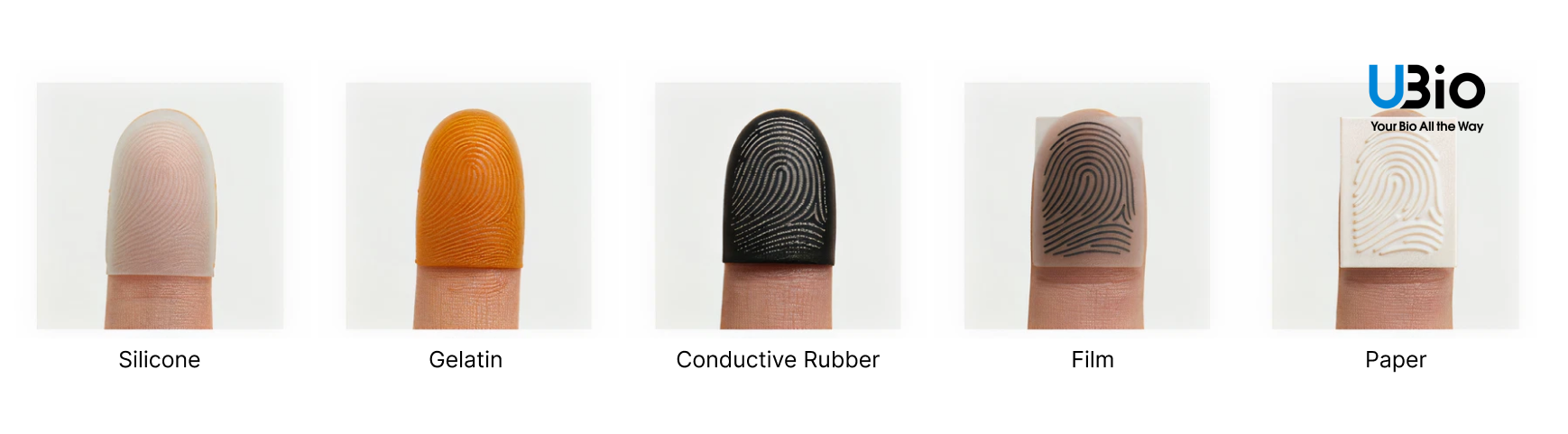
In recent years, attackers have developed increasingly sophisticated methods to replicate fingerprint patterns using materials such as silicone, gelatin, conductive rubber, and even 3D printing. These types of attacks are classified in the biometric security field as presentation attacks.
While traditional minutiae-based systems offer high accuracy in matching fingerprint patterns, they may have limitations when it comes to distinguishing between genuine biometric input and high-quality forgeries. As a result, modern biometric security is shifting beyond simple pattern matching toward technologies that can verify whether the presented fingerprint originates from a live human being.
Detecting the Fake: Why PAD and Liveness Detection Matter in Biometric Security
As security threats become more sophisticated, biometric systems require an additional layer of verification. One of the key concepts addressing this need is PAD (Presentation Attack Detection). PAD refers to technologies designed to detect attempts to bypass biometric systems using artificial biometric artifacts such as silicone, gelatin, conductive rubber, or 3D-printed replicas.
At the core of this process is liveness detection. Liveness detection determines whether the presented biometric sample comes from a real, living human body rather than from a replica that merely mimics its appearance. While fingerprint patterns can be duplicated, it is far more difficult to reproduce the physiological signals that are unique to living tissue.
Ultimately, modern biometric security can no longer rely on pattern matching alone. To effectively defend against spoofing attacks, systems must also verify whether the input originates from a genuine live biometric source. This is why PAD and liveness detection are becoming increasingly important benchmarks in today’s biometric security landscape.
PPG: The “Digital Pulse” That Is Redefining Biometric Security
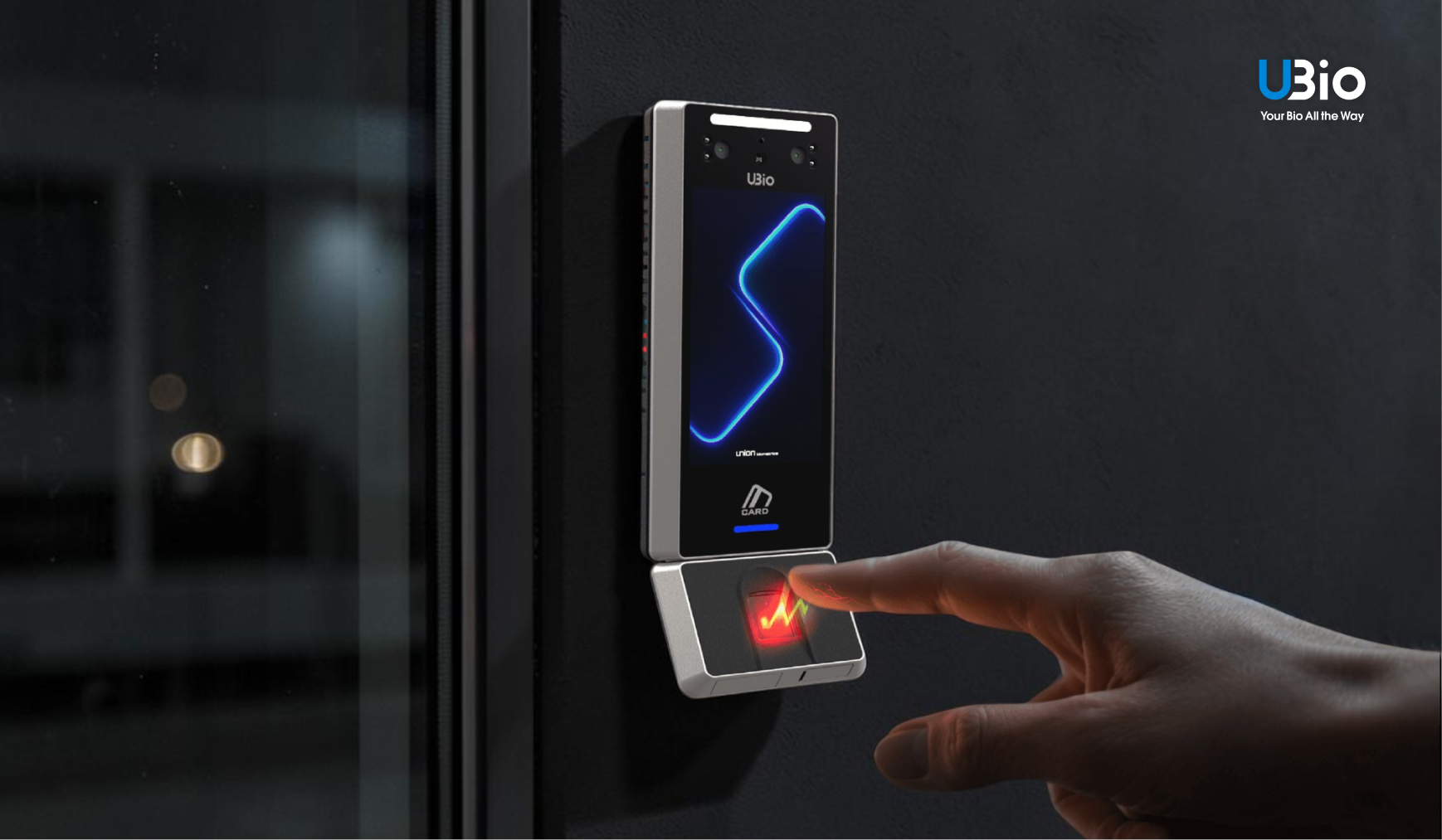
One of the leading ways to implement liveness verification into the actual certification process is through photoplethysmography (PPG). One product that takes this approach is UBio-X LiveGuard. UBio-X LiveGuard is a next-generation biometric terminal that combines the precise feature point matching structure of traditional fingerprinting with PPG-based live presence verification.
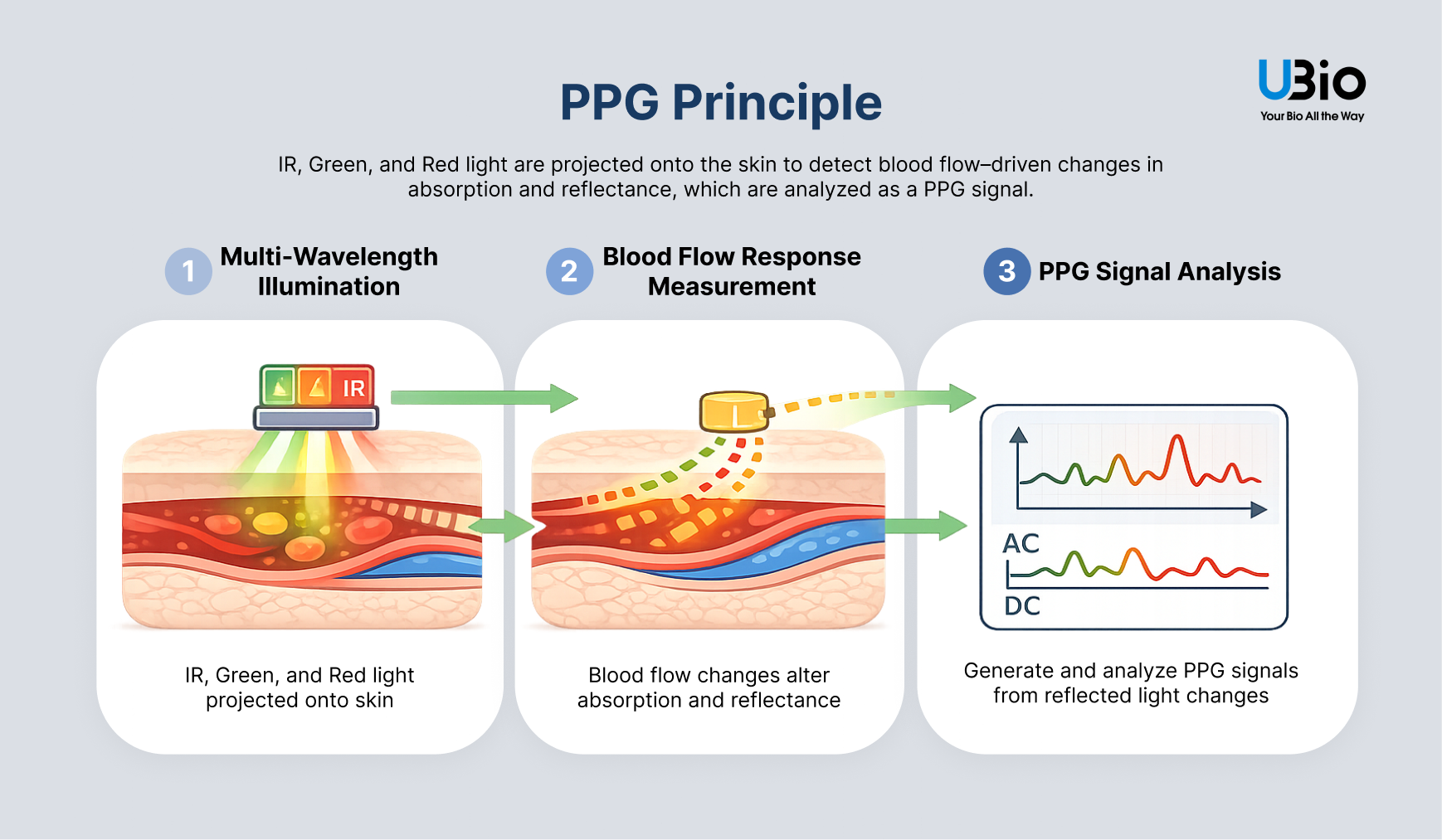
PPG is an optical technology that shines light onto the skin to detect minute changes in blood flow in blood vessels. Every time your heart beats, the blood flow to your fingertip changes, and the system reads this change in real time to determine if you’re having a vital response. Fake fingerprints made from silicone, paper, gelatin, or other materials can mimic the appearance of a pattern, but they can’t replicate the blood flow reactions that occur in a living human body.
This is where PPG-based verification compensates for the limitations of traditional fingerprinting. In other words, it takes the static information of a fingerprint pattern and adds a dynamic signal of a biometric response, taking authentication to the next level of trust.
UBio-X LiveGuard: Proven Trust with Korea’s First KISA Level 1 Certification
In security solutions, what truly matters is not just the adoption of new technology, but how reliably it performs in real-world environments—and whether it has been objectively validated. In this regard, UBio-X LiveGuard goes beyond technical differentiation by proving its credibility through certified testing and patented innovation.
- Korea’s First KISA Level 1 Certification: UBio-X LiveGuard achieved a 100% spoof detection rate and 0% false acceptance rate in fingerprint spoofing tests conducted by the Korea Internet & Security Agency (KISA). It is the first finished product in Korea to receive Level 1 certification, demonstrating top-tier performance in presentation attack detection.
- U.S. Patent for Core Technology: Its advanced biometric authentication, based on pulse signal (PPG) analysis, has been granted a U.S. patent, validating both its technological originality and competitive edge.
Beyond Security: Enhancing Trust Across Your Business
Technologies that are objectively validated do more than strengthen security—they create tangible value in real-world operations. UBio-X LiveGuard goes beyond detecting spoofed fingerprints to enhance the overall reliability of access control and workforce management systems.
| Item |
Description. |
| Stronger Integrity in Access Control |
In high-security environments such as data centers, laboratories, server rooms, and production facilities, even a single unauthorized access can lead to serious consequences. By verifying both fingerprint patterns and physiological signals, LiveGuard significantly elevates the level of physical security. |
| Improved Reliability of Workforce Data |
Proxy attendance and falsified records can result in labor disputes and financial losses. Authentication systems equipped with liveness detection ensure the integrity of attendance data, enabling more transparent and trustworthy workforce management. |
| Greater Operational Efficiency |
As authentication becomes more reliable, the need for manual verification and exception handling decreases. This reduces operational burden while delivering both enhanced security and improved efficiency—key requirements in modern enterprise environments. |
The Next Standard in Security—Verifying “Liveness”
Fingerprint recognition remains a highly effective method of authentication. However, the standard that organizations must consider today goes beyond simple matching accuracy. It is no longer enough to verify whether a fingerprint matches—the system must also determine whether the input comes from a live, genuine individual.
In this context, PPG-based liveness detection should not be seen as a replacement for traditional fingerprint recognition, but rather as the next step that complements its limitations and enhances overall security. UBio-X LiveGuard represents this shift by bringing advanced liveness verification into real-world operational environments.
The standard for fingerprint authentication is evolving. It is moving from simply confirming a match to verifying the presence of a living biometric source. And ultimately, the trust in enterprise security begins with that distinction.